
 EN
 AR
 CS
 DA
 NL
 FI
 FR
 DE
 EL
 HI
 IT
 JA
 KO
 NO
 PL
 PT
 RU
 ES
 SV
 TL
 ID
 SR
 UK
 VI
 SQ
 HU
 TH
 TR
 MS
 IS
 BN
 LO
 MN
 NE
 MY
 UZ
 KY


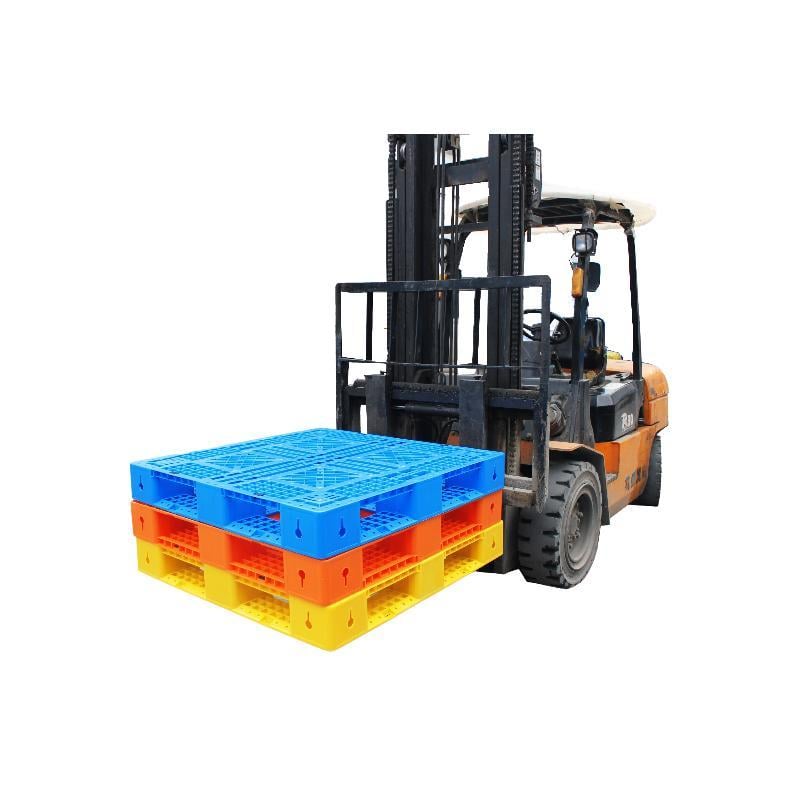 Plastic Pallets
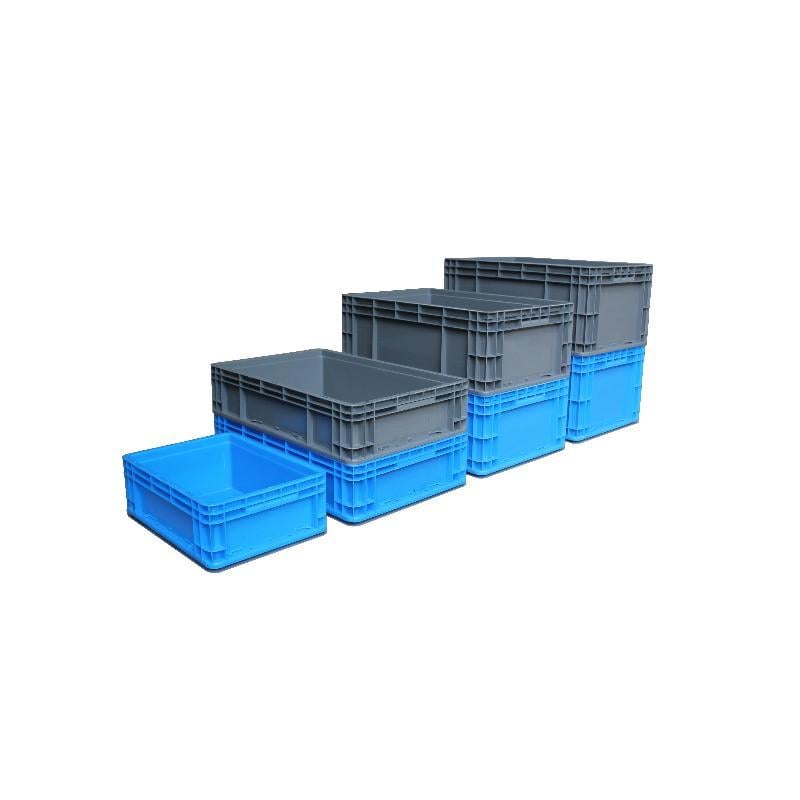 Logistics Box
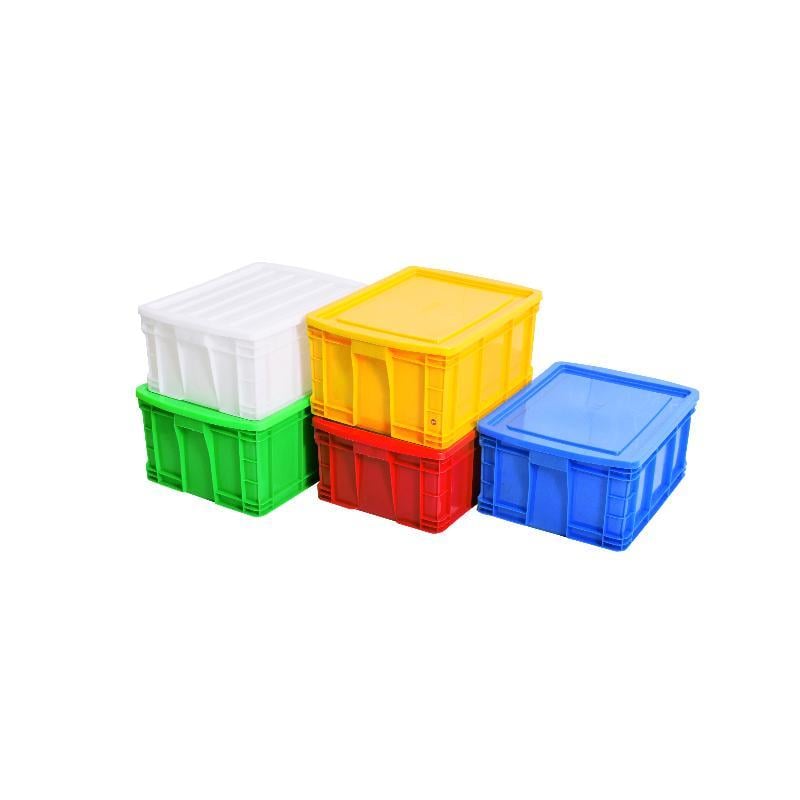 Plastic Crates
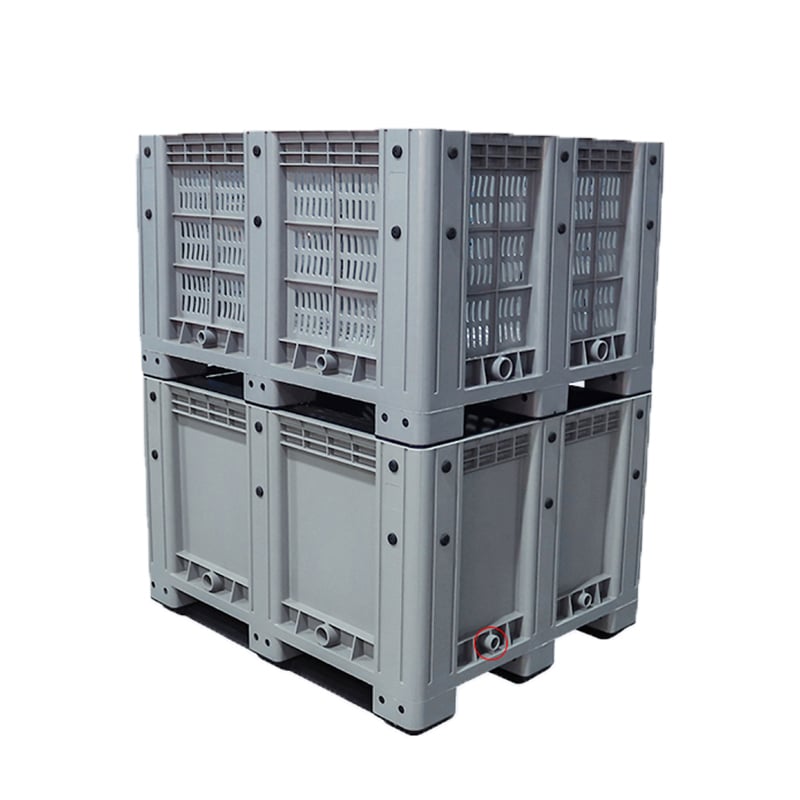 Bulk Containers
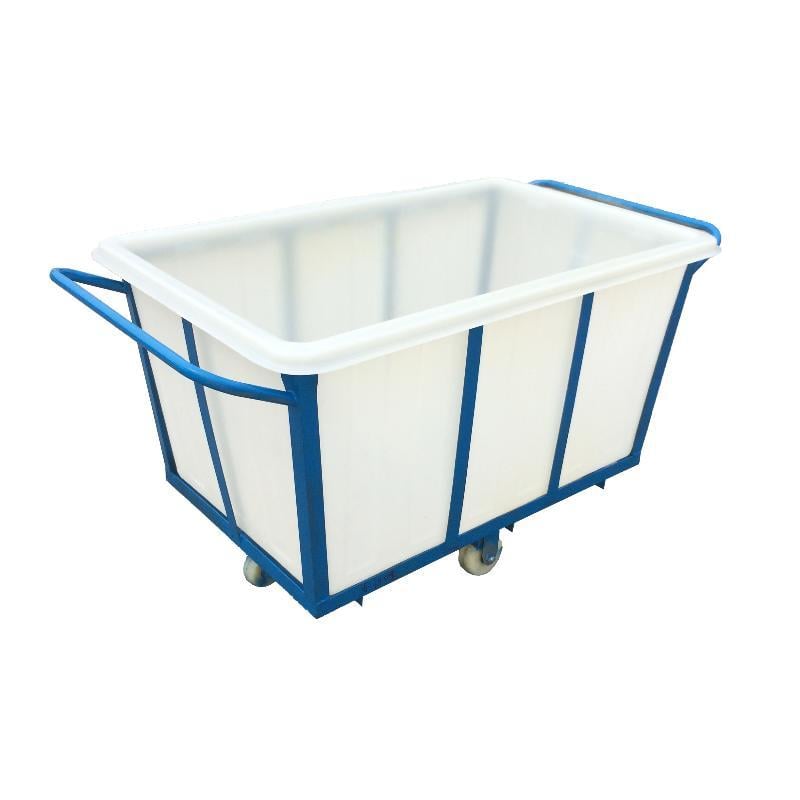 Trolley Cart
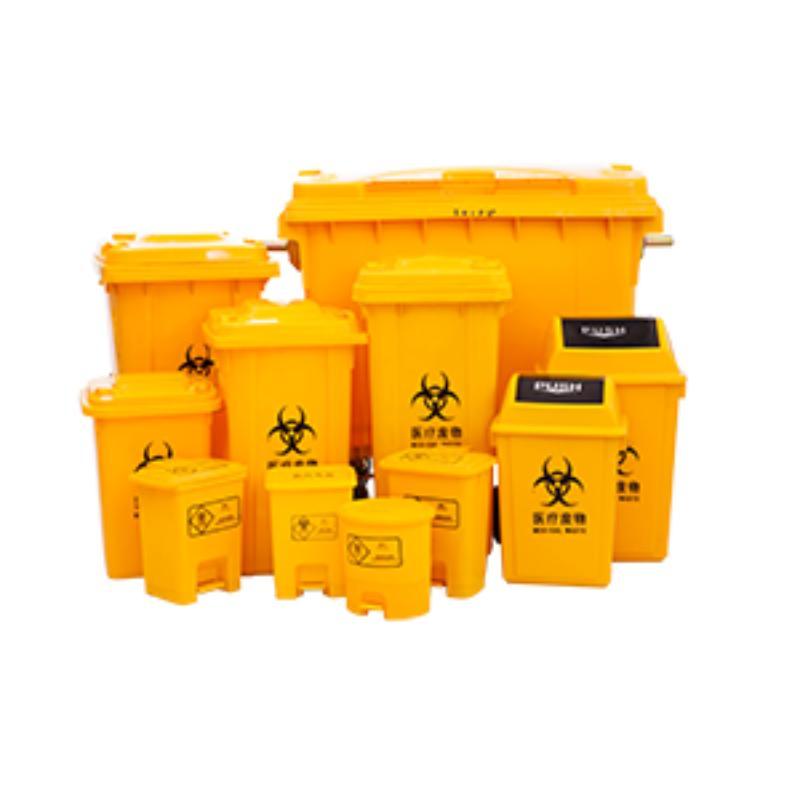 Waste Bins
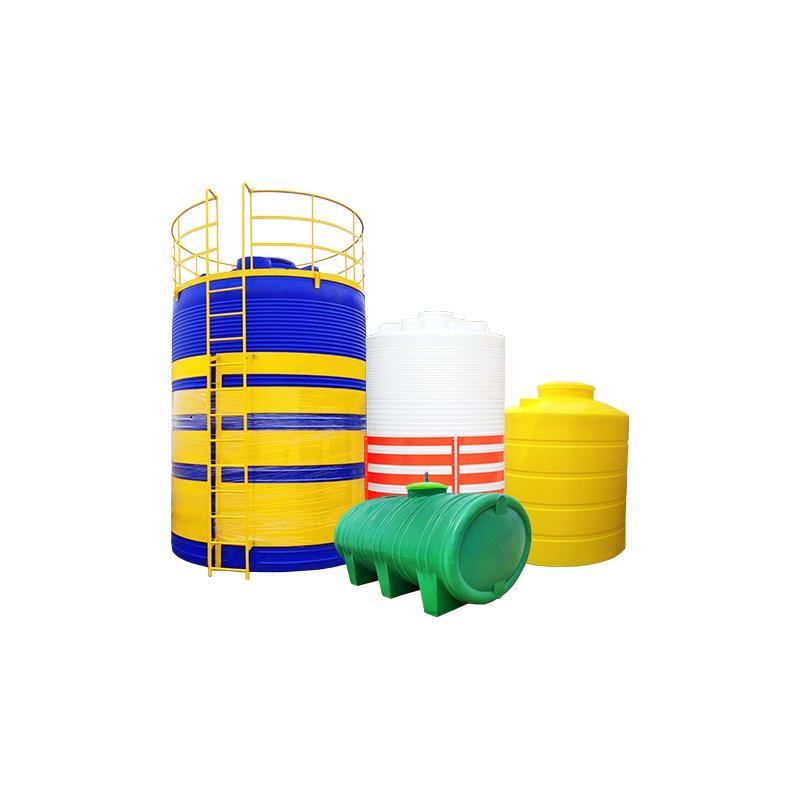 liquid storage containers
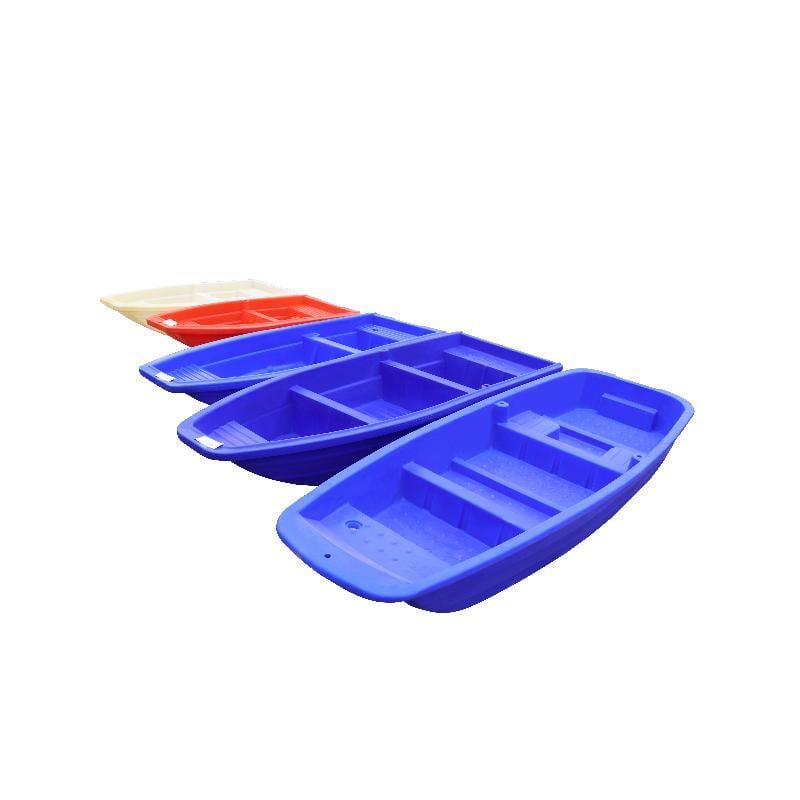 Plastic Aquaculture Products & Boat

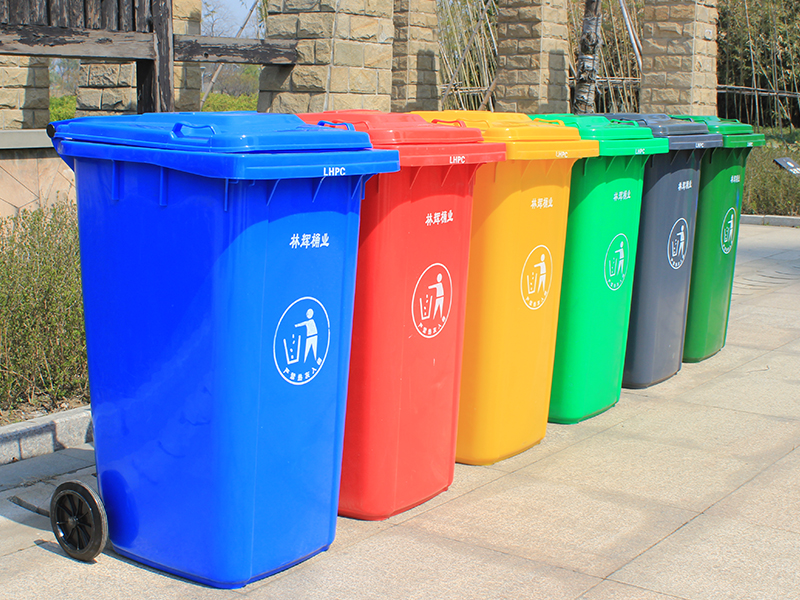
Commercial Waste Bins & Outdoor Trash Cans: A Selection Guide
Waste containers are bought last and replaced first. They sit outside the procurement plan, get chosen on unit price, and fail in the places nobody checked: a lid that a collection crew cannot open with one hand, a bin that slides across a wet floor, a body that fades and cracks after two summers in direct sun. This guide sets out how commercial waste bins and outdoor trash cans are actually specified, working from the waste stream and the site rather than from a catalogue page: lid and pedal mechanisms, mobility and floor surface, colour coding for separation, UV and vandal resistance outdoors, and the handling points that decide whether a container survives its first year.
It is written for the people who specify waste containers across several sites — facilities managers, procurement teams, distributors and public-sector buyers — and it avoids capacity figures on purpose, because the right size follows from your own waste volume.
Start From the Waste Stream, Not the Container
Most buying mistakes begin with the container. The reliable order is the reverse: establish what is being thrown away, how much of it, and how often it leaves the site, then let those three answers decide the format. Commercial waste bins bought on unit price tend to be the ones replaced first. The full range of plastic waste bins is arranged by format rather than by capacity, which is a more useful starting point than a size table.
General Waste, Recycling and Food Waste Behave Differently
General waste is the forgiving one. Volume and ease of collection matter more than material, and a straightforward lidded bin is usually enough. Recycling is a separation problem before it is a capacity problem: if streams are mixed at the bin, the load is rejected further down the line regardless of how good the container is. Food waste is a hygiene problem: sealed lids, smaller units emptied more often, and smooth internal walls that can be washed out between collections.
Where Plastic Is the Wrong Material
Plastic waste bins suit the large majority of commercial and institutional settings, but not all of them. Construction and demolition waste is abrasive and heavy, and steel skips or hooklift containers are the correct answer there. Sites that compact waste, or that hand containers to a collection vehicle with a lifting mechanism, need to confirm compatibility before purchase — not after the first collection is refused. Being clear about where a plastic bin does not belong is more useful than claiming it does everything.
Matching the Bin to the Location
The same container performs very differently in a wash-down kitchen, a wind-exposed loading yard and a hospital corridor. Location decisions usually come down to four things: who opens it, how it moves, what it looks like from outside, and what it has to survive.
Offices and Customer-Facing Areas
In open-plan offices, receptions and retail floors, the bin is part of the furniture and noise is part of the experience. Pedal waste bins keep hands off the lid, which matters where the same container serves staff and visitors, and a soft-close lid removes the clatter that carries across a quiet floor. Appearance and footprint carry more weight here than capacity — a larger bin that looks institutional gets avoided by the people it was bought for.
Hospitality, Kitchens and Food Handling
Food areas need containers that accept wet, greasy waste without becoming a cleaning burden. Pedal operation is close to mandatory where staff are handling food, push-lid and swing-top designs suit pass-through points where hands are full, and smooth internal surfaces with no seams allow the bin to be washed at shift end rather than scrubbed. Capacity should be sized so that a bin is emptied within the shift, not at the end of it.
Hospitals, Clinics and Care Settings
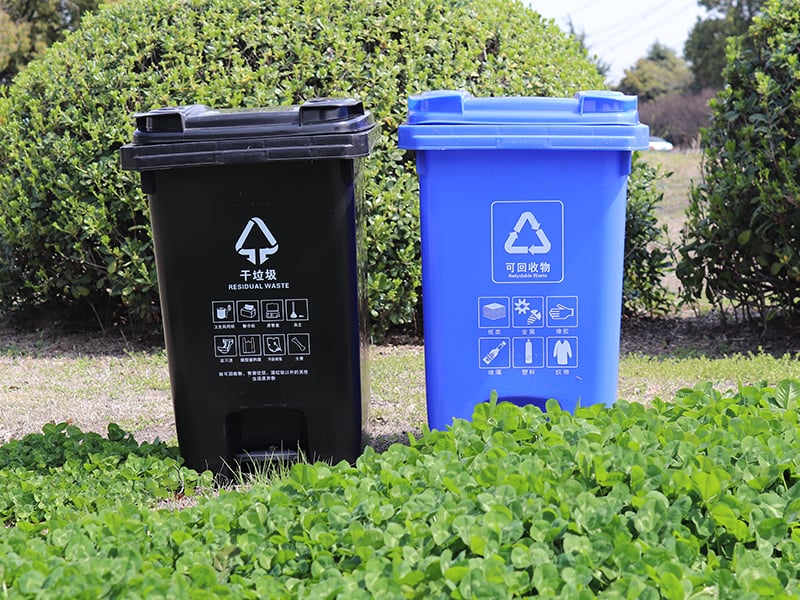
Healthcare waste is a segregation and traceability question. Different streams are held in different containers, distinguished by colour, and the container has to be legible at a glance to people who are not the ones who filled it. Smooth, non-absorbent surfaces that withstand routine disinfection matter more than capacity. Container specification in clinical settings is normally governed by local waste regulations and by the facility's own infection-control policy, and should be confirmed against those before a purchase is made.
Outdoor Public Areas, Streets and Parks
Outdoors, the container is a piece of street furniture that will be used carelessly and left in weather all year. Three requirements dominate: weather resistance, stable fixing, and an opening that does not collect rainwater or windblown litter on the outside of the body. Weather-resistant outdoor trash cans are built around that exposure rather than adapted from an indoor design. Where the site is exposed, anchoring or a weighted base is not optional — a bin that moves in wind becomes a hazard report.
Lid Mechanisms and Daily Use
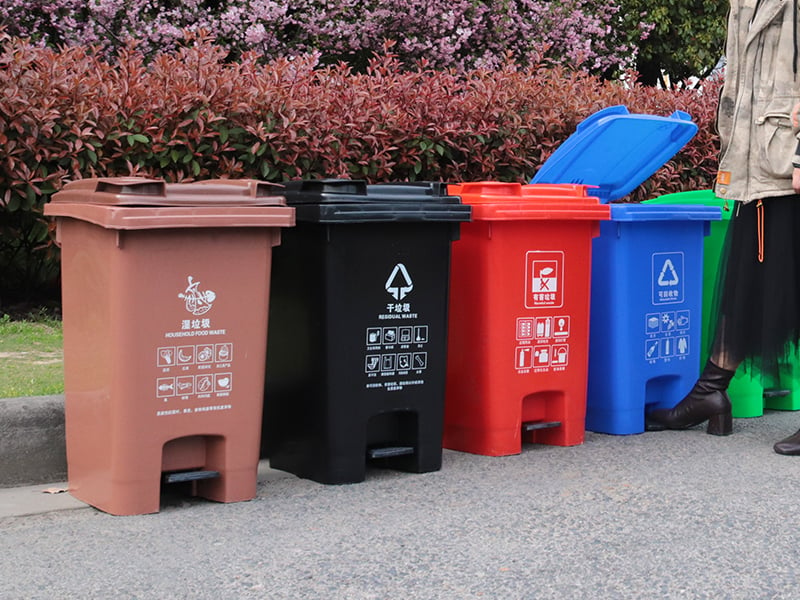
The lid is where most waste bin complaints originate, and it is usually chosen later than the body. Four common mechanisms cover most commercial needs.
- Pedal-operated: hands stay clear of the lid, which suits food handling, clinical areas and shared public bins. Service life depends on the pedal linkage rather than the body, so it is the part to ask about.
- Push-lid / swing-top: no mechanism to wear out, and works with full hands. Slightly weaker on odour control where the flap does not seat well.
- Hinged lid: the firmest containment and the simplest design. Best where the bin is opened deliberately rather than in passing.
- Open-top: the lowest cost and the easiest to fill. Suitable for dry, high-turnover waste in supervised areas, and a poor choice wherever rain or odour is a factor.
A lid that a collection crew cannot open one-handed, or that does not stay open while the bag is changed, will be propped open with a brick within a week — and then the odour and rain problems the lid was meant to solve are back.
Mobility, Handling and Collection
How a bin is moved decides how long it lasts. Castors and wheels are the common failure point on large containers, and their suitability depends entirely on the floor.
Wheels and Floor Surface
Smooth internal floors — tile, sealed concrete, vinyl — take standard castors well. Rough outdoor surfaces, expansion joints and kerbs punish small wheels, and cracked castors are the usual reason a large bin is retired early.
Manual Handling and the Collection Crew
A container that is fully loaded may be well beyond a comfortable manual lift, so handle position, height and balance matter as much as the wheel. Where a bin is tipped into a collection vehicle, the tipping point and any lifting interface have to be settled with the hauler beforehand. It fits the space but not the vehicle: that is the most common reason a newly delivered container is rejected on site.
Materials, Colour Coding and Service Life
Colour does two jobs. It identifies the waste stream, which is what recyclers and auditors look for, and it identifies the owner, which is what keeps bins on site. Standard colour sets are usually available across a range, with custom colours for sites that need to match a corporate palette or a municipal scheme.
For HDPE waste containers, the practical questions are UV stability and impact resistance rather than nominal thickness. Outdoor bodies need stabilisation against sunlight, and cold-weather brittleness is the usual cause of cracking in containers that otherwise look sound. Expected service life in permanent sun exposure should be confirmed for the actual location rather than assumed from a general claim.
Specifying Waste Bins Across Several Sites
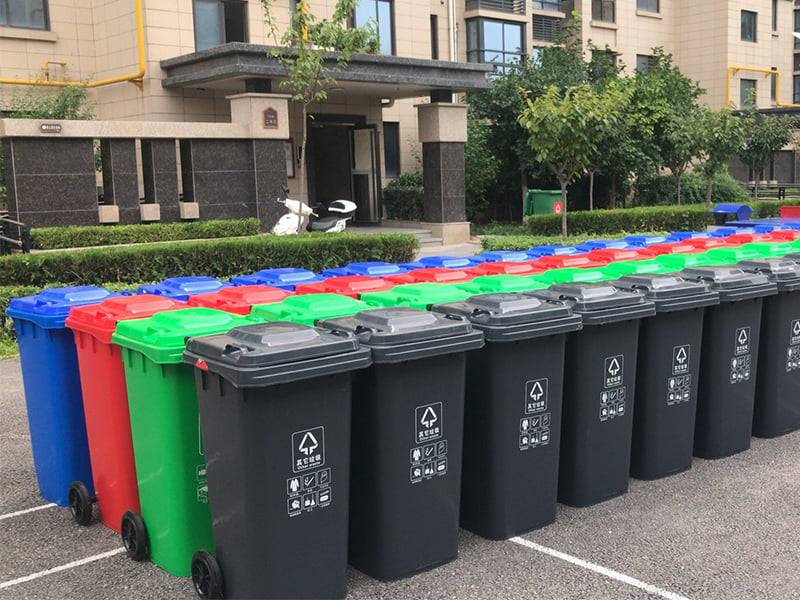
Organisations rarely buy one bin. A retail group, a hospital estate or a facilities contractor buys dozens across sites with different waste streams, floor surfaces and collection arrangements. Two things make that manageable: a small number of container types, consistently specified, so that lids, bags and spare parts remain interchangeable; and a standard specification document covering waste stream, daily volume, collection frequency, floor surface, indoor or outdoor use, fixing method and vehicle access.
Sites are also under pressure to show waste separation working, not just installed. Clear colour coding, bins placed where the waste is generated rather than where it is convenient, and containers that staff will actually use are what separation rates respond to. Sorting litter bins built around a shared opening or a stacked frame make that easier to roll out across a site.
FAQ: Commercial Waste Bins and Outdoor Trash Cans
How do I choose the right size waste bin?
Start from daily waste volume, multiply by the number of days between collections, and allow headroom for peak days. Usable capacity is lower than nominal volume once a bag or liner is fitted, so the bin should be sized on what it actually holds.
Which lid type is best for a commercial kitchen?
Pedal-operated bins are the usual choice where staff are handling food, because the lid opens without hand contact. Push-lid designs suit pass-through points where hands are full. In both cases, a removable liner and smooth internal walls matter more than the lid style for daily cleaning.
Are plastic bins suitable for outdoor public areas?
Yes, provided the material is stabilised against UV and the bin is anchored or weighted. The failure mode outdoors is rarely the body itself but fixing, fading and cold-weather cracking, so those three points should be confirmed for the site.
Can waste bins be colour-coded for different streams?
Colour coding is standard practice for separating waste streams and is usually available across standard colours, with custom colours for specific schemes. The coding should match whatever local sorting requirement applies at the site.
What should I check before ordering a wheeled container?
Check the floor surface the wheels will run on, the load the container will carry when full, and whether the collection vehicle can lift or tip it. Vehicle compatibility should be confirmed with the hauler before the order is placed.
Key Takeaways
- Work from the waste stream and the site, not from a catalogue page. Commercial waste bins for general, recyclable and food waste each impose different requirements on the same container.
- Choose the lid mechanism by how the bin is used: pedal for food handling and shared public areas, hinged for deliberate use, open-top only where rain and odour are not concerns.
- Match wheels and handling to the actual floor and to the collection vehicle, and confirm vehicle compatibility with the hauler before ordering.
- Treat colour coding as a working requirement for separation, and confirm UV stability and cold-weather performance for outdoor sites.
- When buying across several sites, standardise the container formats and the specification document so lids, bags and parts stay interchangeable.
Contact Us
Email: [email protected]
Mobile: +86 13915871341
Website: https://www.linhuiplastics.com/
Table of Contents
- Start From the Waste Stream, Not the Container
- Matching the Bin to the Location
- Lid Mechanisms and Daily Use
- Mobility, Handling and Collection
- Materials, Colour Coding and Service Life
- Specifying Waste Bins Across Several Sites
- FAQ: Commercial Waste Bins and Outdoor Trash Cans
- Key Takeaways
- Contact Us