
 EN
 AR
 CS
 DA
 NL
 FI
 FR
 DE
 EL
 HI
 IT
 JA
 KO
 NO
 PL
 PT
 RU
 ES
 SV
 TL
 ID
 SR
 UK
 VI
 SQ
 HU
 TH
 TR
 MS
 IS
 BN
 LO
 MN
 NE
 MY
 UZ
 KY


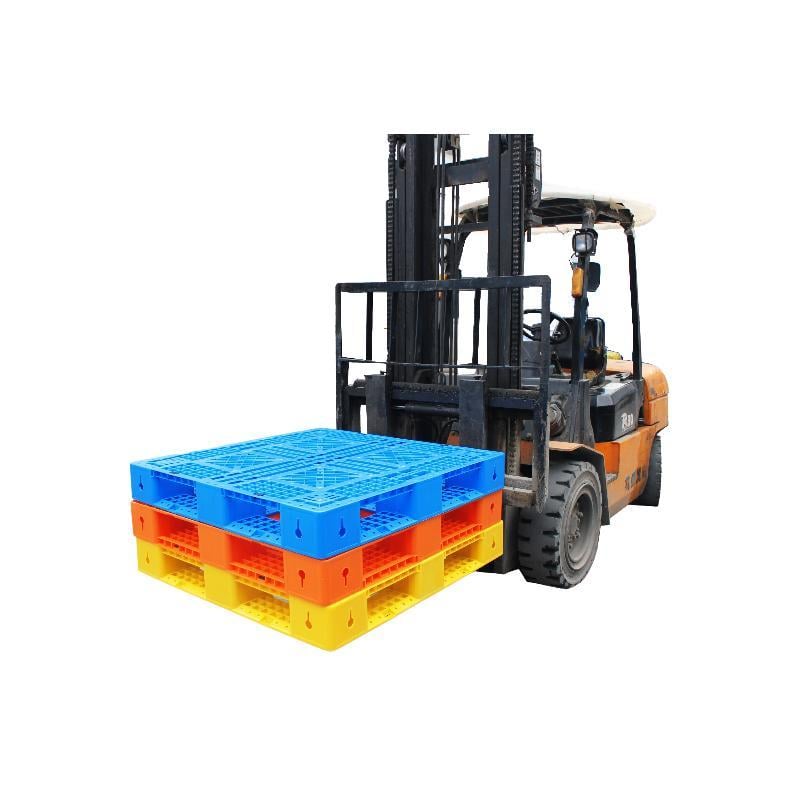 Plastic Pallets
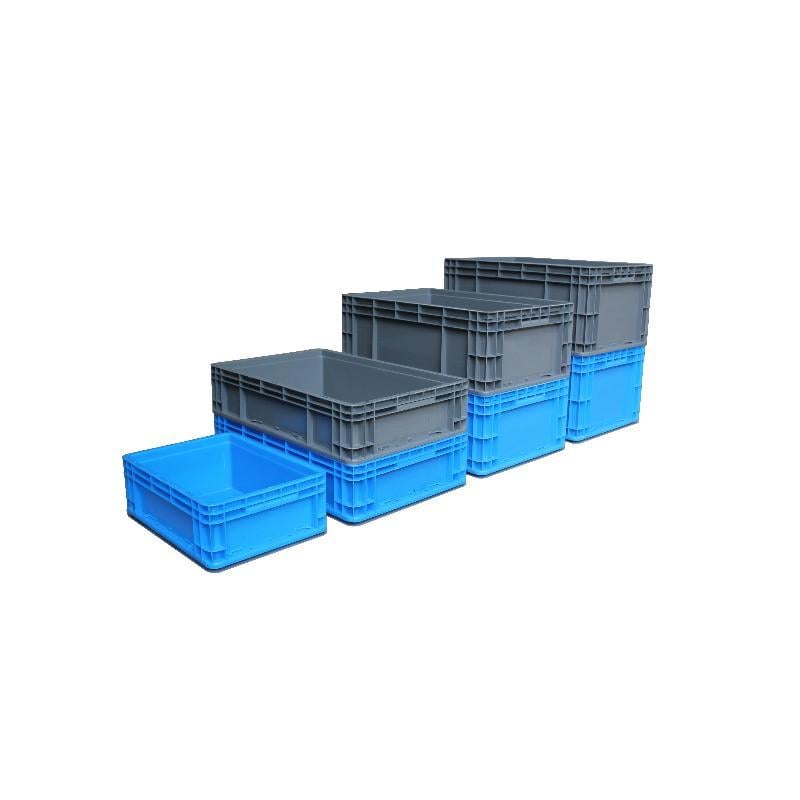 Logistics Box
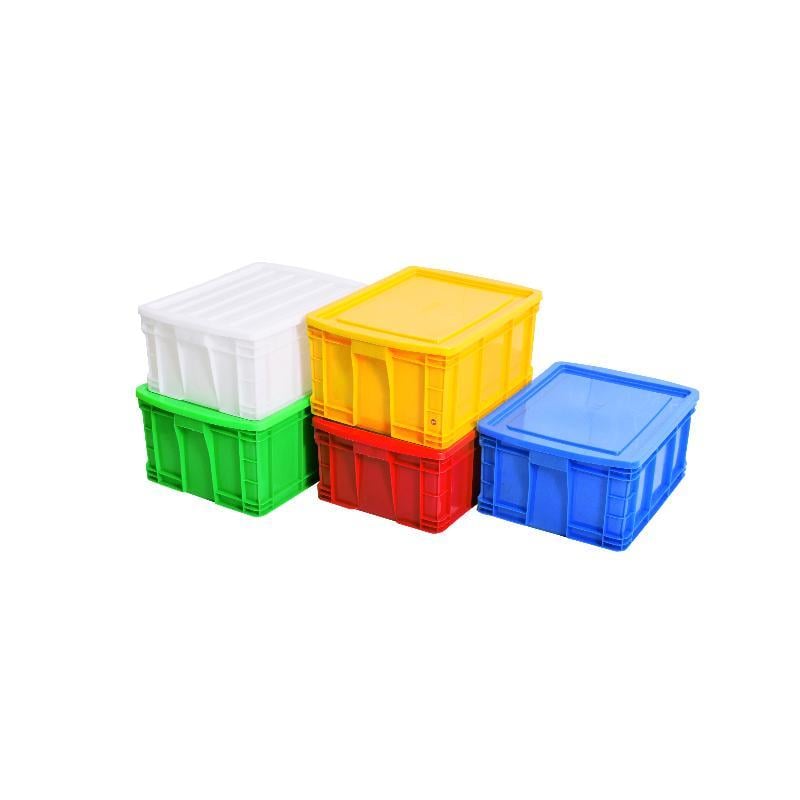 Plastic Crates
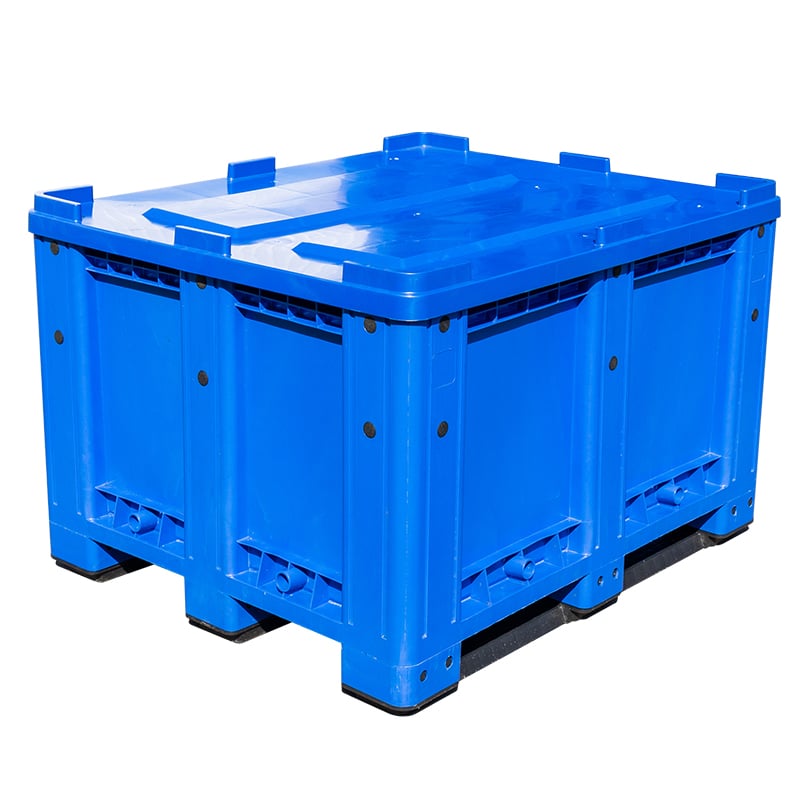 Bulk Containers
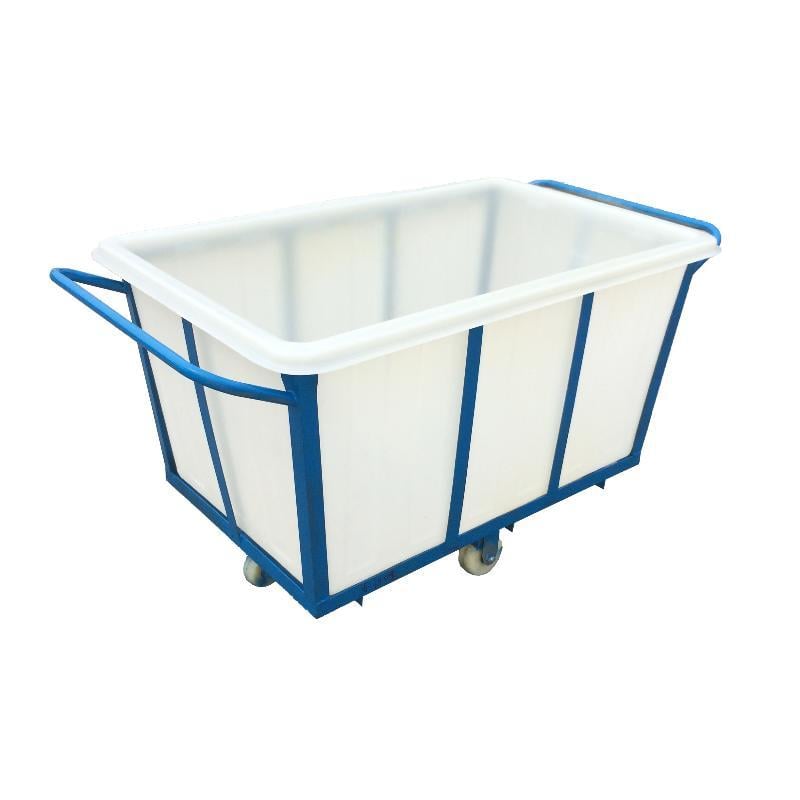 Trolley Cart
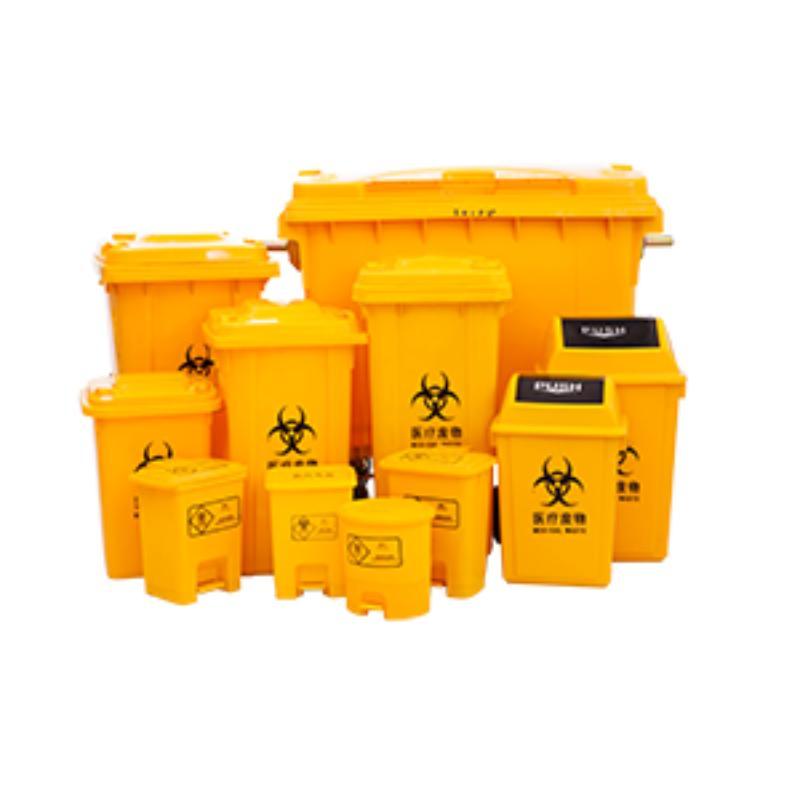 Waste Bins
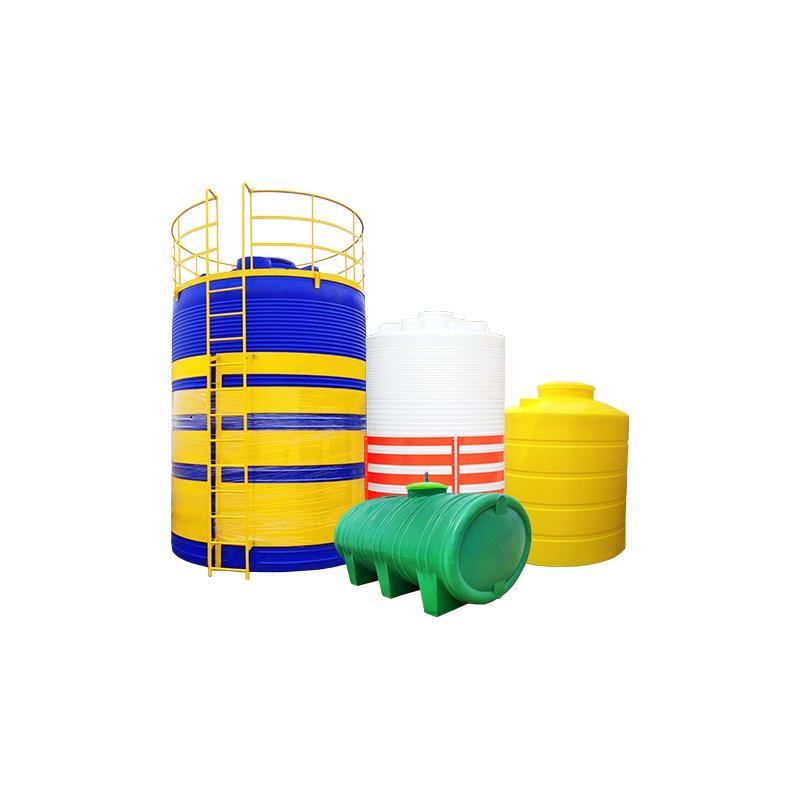 liquid storage containers
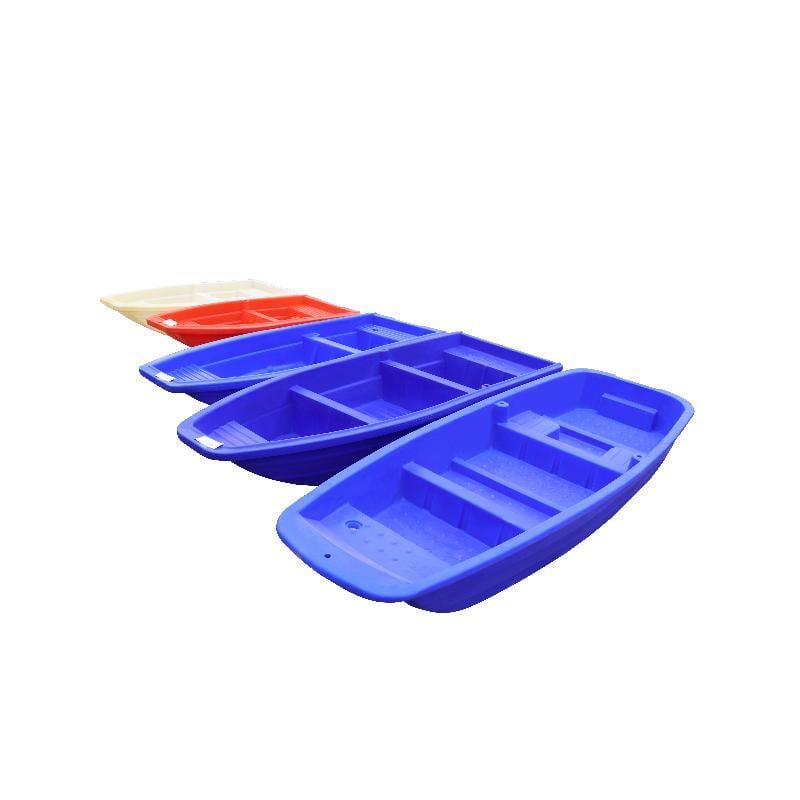 Plastic Aquaculture Products & Boat

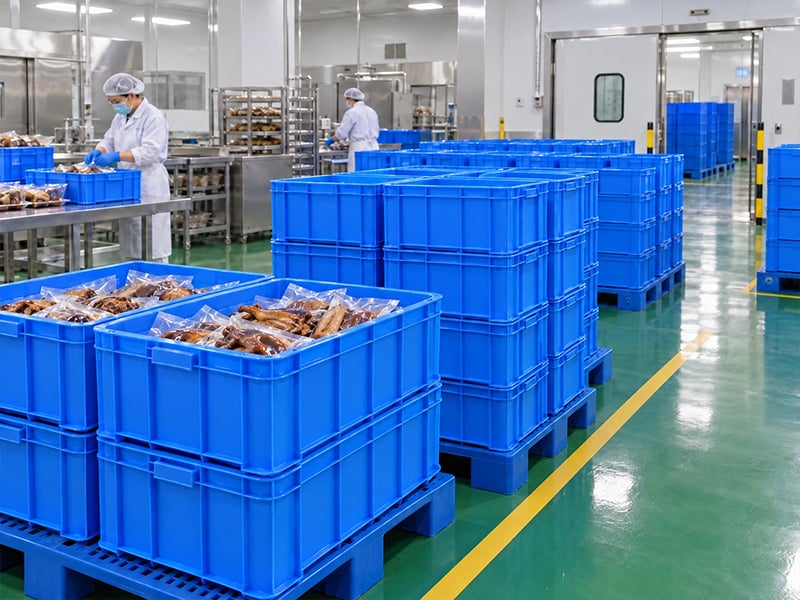
In a cooked meat processing facility, everything that happens after the cook step belongs to the most sensitive part of the chain. The product is ready to eat, there is no further kill step downstream, and every surface that touches it — including the container it travels in — becomes part of the hygiene boundary. That is why the crates moving between the cook line, chillers, packing rooms and dispatch bay are specified more carefully than ordinary totes. This guide sets out how stacked food-grade plastic crates are chosen for that environment: what food-grade means in practice, how stacking behaves from the cook line to the cold room, how raw and cooked zones are kept apart, and what to confirm before placing an order.
Why the Post-Cook Zone Raises the Bar for Crates
Raw meat handling and cooked meat handling are not the same job. Before cooking, heat is the final safeguard — a container that has picked up contamination on the raw side will still pass through the cook step. After cooking, that safeguard is gone: the product moves through cooling, tempering, slicing and packing, and at each stage the crate itself is a potential recontamination point.
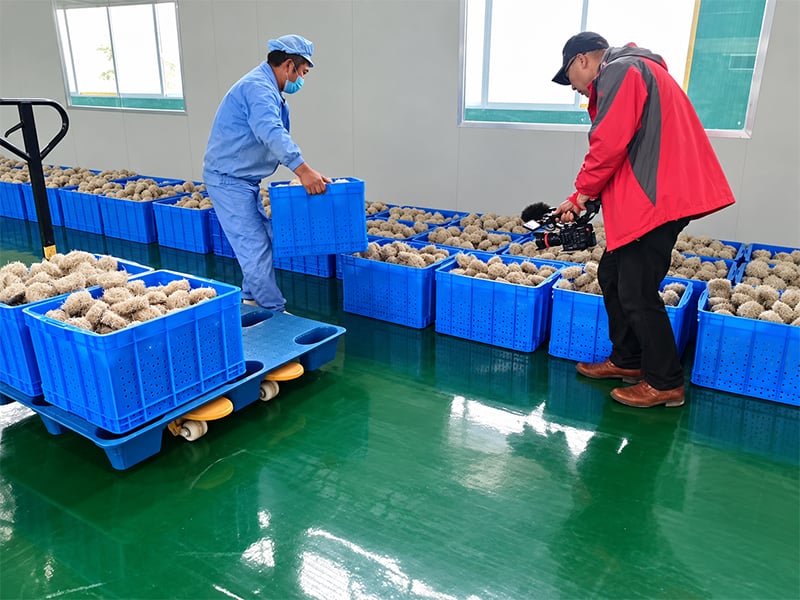
Three consequences follow for container selection. First, crates in the cooked zone need smooth, non-porous interior surfaces that can be washed down completely between uses. Second, they need to survive frequent washing with detergents without degrading, because cracks and pits harbour residue where a spray jet cannot reach. Third, the flow of containers has to be managed as deliberately as the flow of product — a crate that has travelled through the raw zone should not simply reappear on the cooked line. Most facilities solve this with dedicated container populations per zone, which is easier with plastic because colour is moulded into the material rather than painted on.
What Food-Grade Means in Practice for Plastic Crates
Food-grade plastic crates are defined less by a label and more by a set of physical behaviours. The resin must be suitable for food-contact applications, the interior surfaces must be smooth and non-absorbent, and the crate must withstand repeated washing without shedding particles or cracking. Compared with wooden containers, injection-moulded plastic crates do not splinter, do not absorb liquids or odours, and do not corrode — which is why they have largely replaced wood in cooked and ready-to-eat handling.
When evaluating a model, buyers usually look at the details that determine washability. Solid walls suit cooked product and washdown-heavy zones; vented walls suit produce and chilled flows. Radiused interior corners are easier to clean than sharp internal angles. Light-coloured interiors make residue visible during inspection, which supports the facility's own checks. Handle geometry also matters: crates are handled with wet gloves, and a handle that cannot be gripped securely becomes a drop risk.
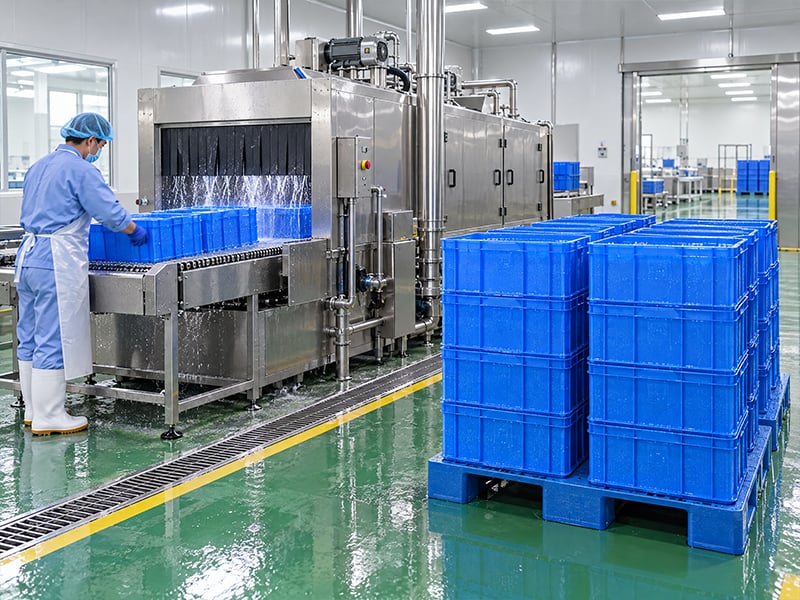
One practical note on sourcing: food-contact suitability should be confirmed in writing for the specific resin and colour combination being ordered, not assumed from a product photo. A responsible supplier will state it on request — and the same applies to compatibility with the wash chemicals your facility already uses.
The same material logic scales up. Where a facility needs larger food-contact containers for brine, water or marinate handling, food-grade plastic buckets follow the same rules: smooth washable interiors, rounded corners and written food-contact confirmation for the resin in use.
Stacking Food-Grade Plastic Crates From Cook Line to Cold Room
Stacking is not a convenience feature in a cooked meat plant — it is how the chilled rooms stay usable. Floor space inside a chiller is among the most expensive square metres in the building, and stacked food-grade plastic crates are the standard answer. But a stacked loaded crate behaves differently from a single one, and this is where specification errors surface.
Load capacity is not one number. Static load, dynamic load and stacking load are three separate figures, and the one that governs a chilled room is the stacking figure: the weight a crate can carry on top of it over time, at the temperature of the room. Plastics lose stiffness at low temperatures, so a stack that performs in an ambient warehouse can deform in a chiller. Stacking performance at the actual storage temperature and stack height should be confirmed with the supplier, not estimated from a catalogue.
Lids change the picture as well. Lidded stacked crates protect contents during transfer between zones and keep the top of the stack usable as a bearing surface, while open-top crates stack into each other but leave contents exposed between rooms. Follow the route the container takes, not the container itself.
Produce-side lines work under the same load rules: food-grade crates for fresh produce spend their lives in chilled rooms, so their stacking figures deserve the same temperature-specific confirmation as any cooked-meat crate.
Separating Raw and Cooked: Zoning With Containers
Cross-contamination control between raw and cooked areas is the central discipline of a cooked meat facility, and containers participate in it. The usual practice is colour zoning: one crate colour dedicated to the cooked zone, another to raw, another to external returns or waste, with the rule that a colour never crosses its boundary. Because the colour is moulded into the plastic, it survives washing and years of handling without repainting or re-labelling.
Two operational details decide whether colour zoning actually works. The first is empty-crate storage — clean crates need to be stored off the floor, protected from splash and dust, in the zone they serve, or the discipline breaks at the storage point. The second is returns handling: crates coming back from customers or distribution cannot re-enter the cooked zone until they have completed the wash process — and many plants mark them with a distinct colour so the sort is unambiguous at the dock.
For buyers standardising across several lines or sites, dedicated zone colours also simplify ordering and replacement — damaged crates are swapped like-for-like without a mixed population developing.
Washdown, Drainage and Crate Lifespan
In a cooked meat plant the crate's working life is measured in wash cycles as much as in trips. Daily washdown, sometimes at elevated temperatures, is the environment the crate lives in, and three design features govern how well a model survives it.
Surface geometry comes first: smooth walls with radiused corners shed water and residue, while deep ribs, recessed label areas and sharp internal angles trap debris and slow drying. The second is drainage — wherever a crate is washed, water needs somewhere to go, and standing water in a stacked corner becomes a hygiene finding at the next audit. The third is impact behaviour after repeated washing: as crates age, wash chemicals and handling take a toll, and inspection routines should include the base and corners, where damage concentrates.
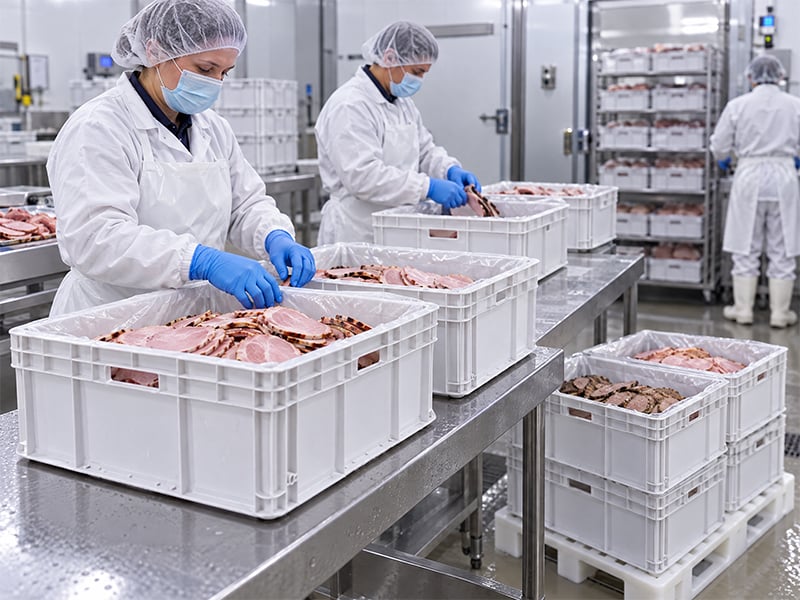
Retirement criteria deserve a line in the crate management plan. A crate with a crack, a deformed rim or a damaged handle is removed from the cooked zone, not patched — the cost of one discarded crate is trivial next to a rejected batch. Facilities that remove failing containers early get longer effective service from the population as a whole.
A Checklist Before You Order Food-Grade Plastic Crates
The questions that sort out a crate specification quickly are worth writing down before the first enquiry. Two models that look identical in a photo can differ on every one of these points.
-
Contact and application: does the crate touch product directly, or carry it lined? Direct contact raises material confirmation to the top of the list.
-
Solid or vented walls: cooked and washdown-heavy flows usually want solid walls; chilled produce flows may want ventilation.
-
Internal dimensions: check them against your portion trays or packing formats, not the external footprint.
-
Stacking at temperature: state your stack height, payload and cold-room temperature, and ask for the stacking figure at those conditions.
-
Lids: needed for zone-to-zone transfer, or not, depending on the route.
-
Colour plan: one colour per zone, confirmed as moulded-in colour, with the scheme documented so repeat orders match.
-
Wash compatibility: confirm material tolerance to your detergents and wash temperatures.
-
Volumes: initial quantity, repeat frequency and replacement rate.
For mixed finished-goods flows that outgrow crates, stackable bulk containers with lids extend the same stacking logic to larger unit loads.
Frequently Asked Questions
What makes a plastic crate food-grade?
A resin suitable for food-contact applications, smooth non-porous interior surfaces that wash down completely, and construction that tolerates repeated washing without cracking or shedding. Confirm food-contact suitability in writing for the specific model, resin and colour you order.
Can the same crates be used in raw and cooked meat areas?
Most facilities keep the populations separate, using moulded-in colour to mark each zone. A crate that has served the raw area does not return to the cooked line until it has completed the wash process — and many plants route returned or external crates through a distinct colour so the sort is unambiguous.
How high can stacked food-grade plastic crates be stacked in a cold room?
It depends on the model's stacking load, the payload and the room temperature, because plastic stiffness changes at low temperatures. State your stack height and conditions to the supplier and ask for the stacking figure at those conditions.
Are lids necessary on crates for cooked meat?
Where crates move between zones or stand in shared areas, a lid protects the contents and keeps the stack stable. Where crates stay within one supervised room, open-top crates may be preferred for speed of loading.
How should food-grade plastic crates be cleaned?
Through the facility's normal washdown process, paying attention to corners and base ribs where residue collects. Confirm compatibility with your detergents and wash temperatures, and retire cracked or deformed crates from the cooked zone early.
Can crates be ordered in custom colours with a company logo?
Custom colours are standard practice, and logo printing is available subject to confirmation of product details. Because colour is the backbone of zone separation in a cooked meat facility, most buyers order the colour scheme as part of the specification rather than as an afterthought.
Key Takeaways
-
In a cooked meat processing facility, crates in the post-cook zone are part of the hygiene boundary — smooth, washable surfaces and a managed container flow matter more than unit price.
-
Stacking is a temperature-dependent specification: confirm the stacking load of stacked food-grade plastic crates at your actual cold-room conditions and stack height.
-
Moulded-in colour zoning keeps raw and cooked container populations apart, and it survives washing for the life of the crate.
-
Retire cracked or deformed crates from the cooked zone early; the container is cheaper to replace than the batch it contaminates.
-
Confirm food-contact suitability, wash compatibility and stacking figures in writing before ordering food-grade plastic crates — not from a product photo.
Contact Us
Email: [email protected]
Mobile: +86 13915871341
Website: https://www.linhuiplastics.com/
Table of Contents
- Why the Post-Cook Zone Raises the Bar for Crates
- What Food-Grade Means in Practice for Plastic Crates
- Stacking Food-Grade Plastic Crates From Cook Line to Cold Room
- Separating Raw and Cooked: Zoning With Containers
- Washdown, Drainage and Crate Lifespan
- A Checklist Before You Order Food-Grade Plastic Crates
-
Frequently Asked Questions
- What makes a plastic crate food-grade?
- Can the same crates be used in raw and cooked meat areas?
- How high can stacked food-grade plastic crates be stacked in a cold room?
- Are lids necessary on crates for cooked meat?
- How should food-grade plastic crates be cleaned?
- Can crates be ordered in custom colours with a company logo?
- Key Takeaways
- Contact Us