
 EN
 AR
 CS
 DA
 NL
 FI
 FR
 DE
 EL
 HI
 IT
 JA
 KO
 NO
 PL
 PT
 RU
 ES
 SV
 TL
 ID
 SR
 UK
 VI
 SQ
 HU
 TH
 TR
 MS
 IS
 BN
 LO
 MN
 NE
 MY
 UZ
 KY


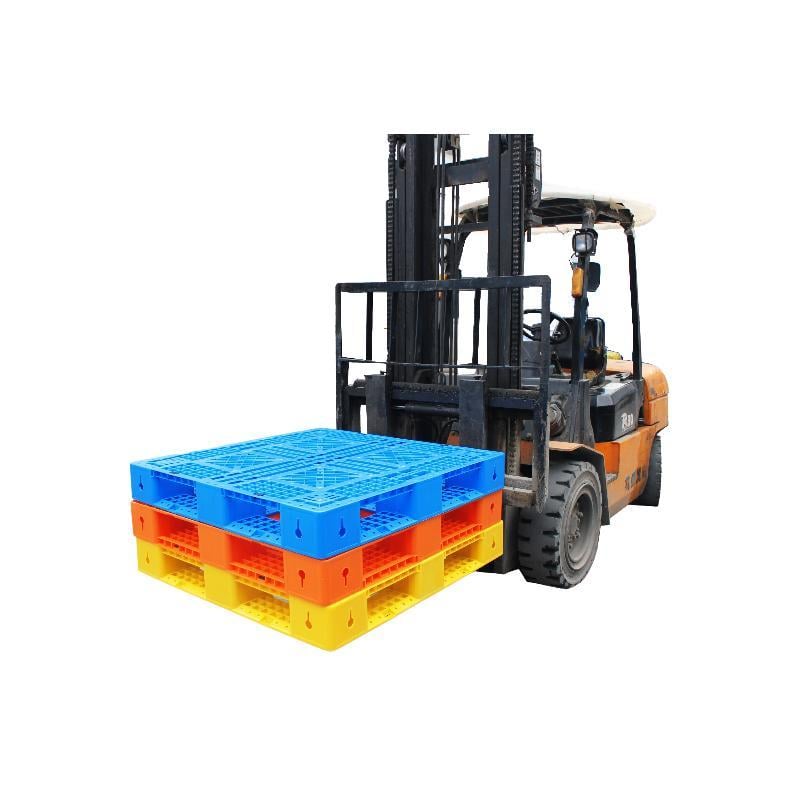 Plastic Pallets
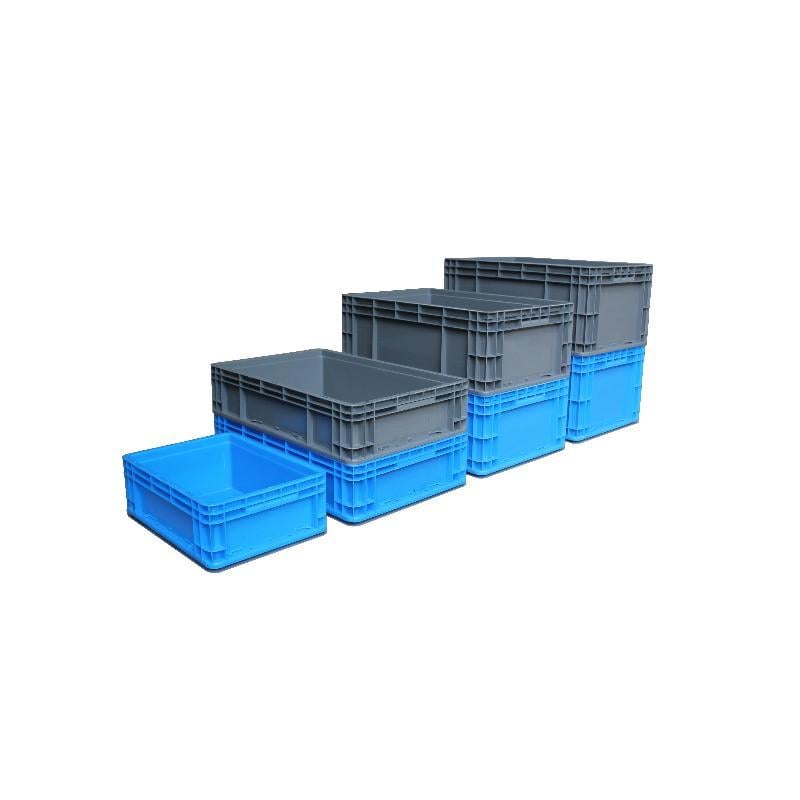 Logistics Box
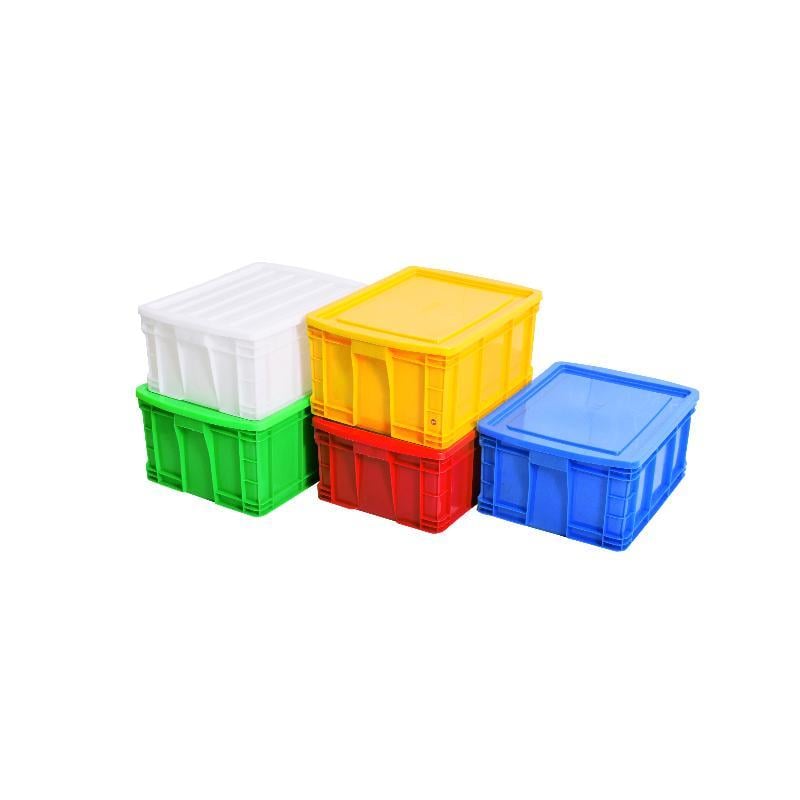 Plastic Crates
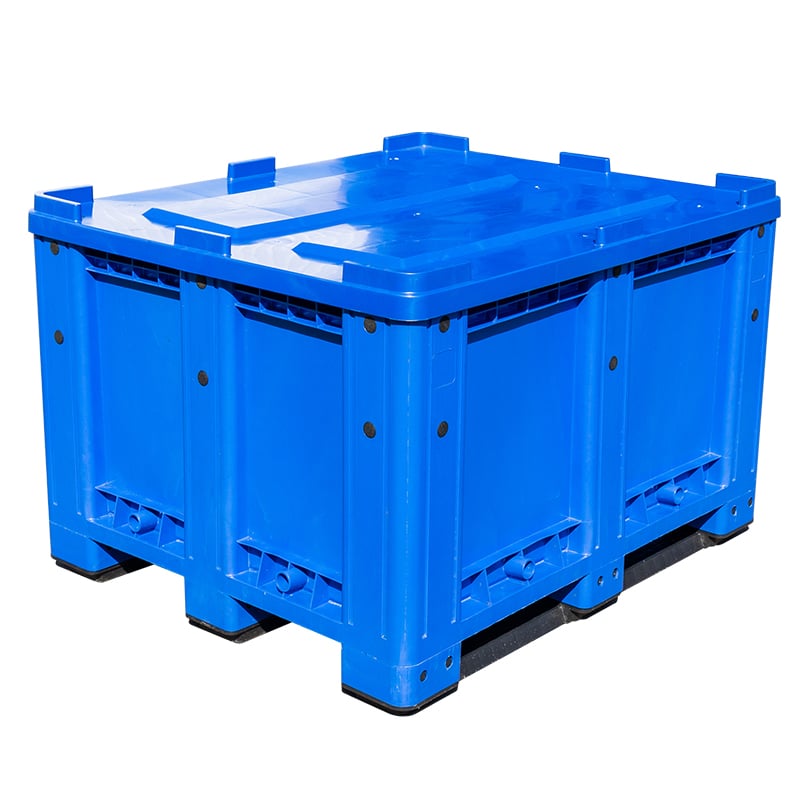 Bulk Containers
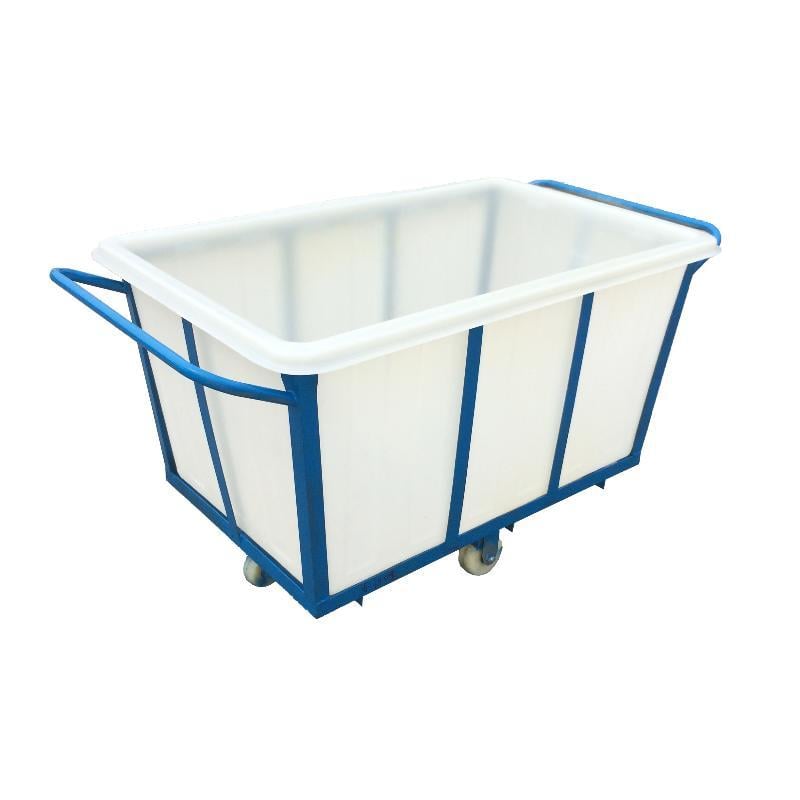 Trolley Cart
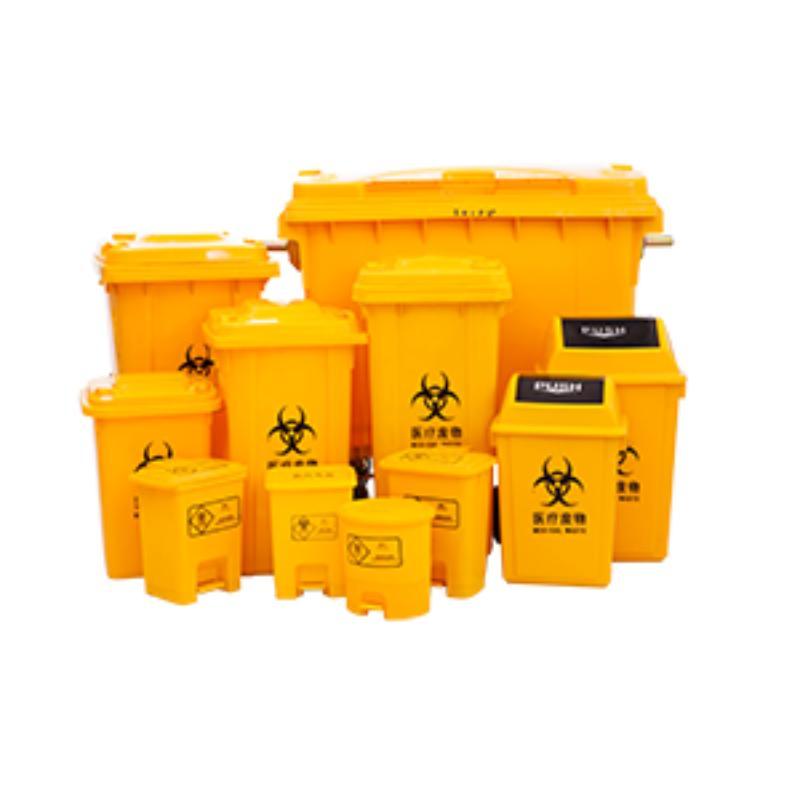 Waste Bins
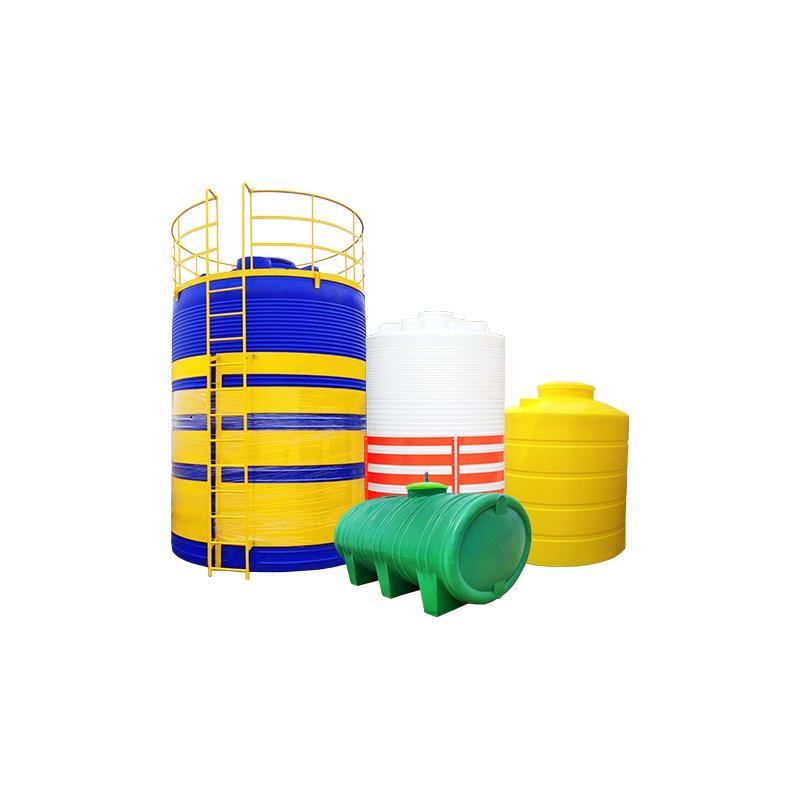 liquid storage containers
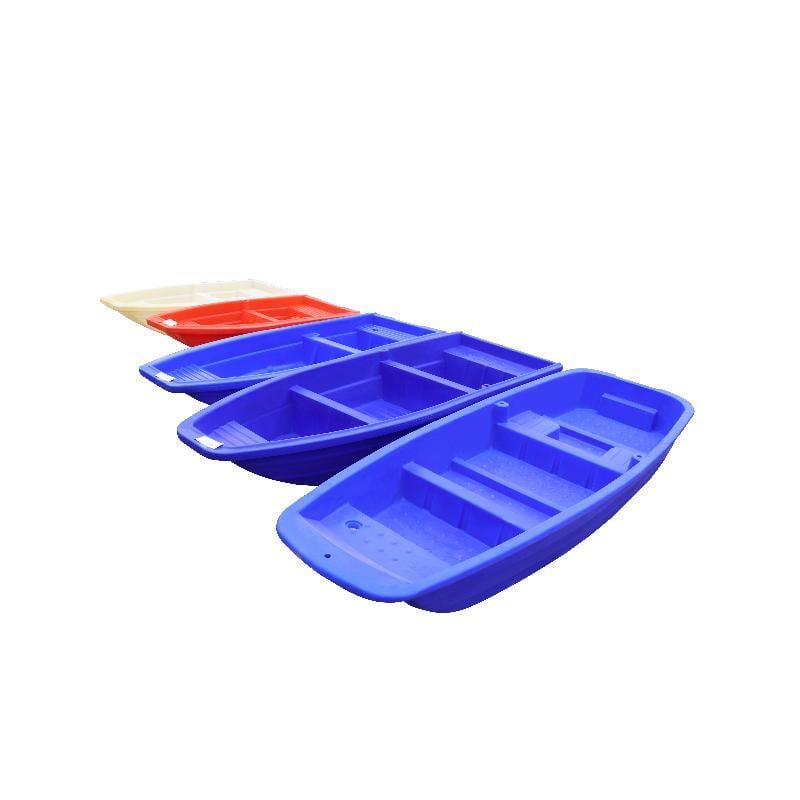 Plastic Aquaculture Products & Boat

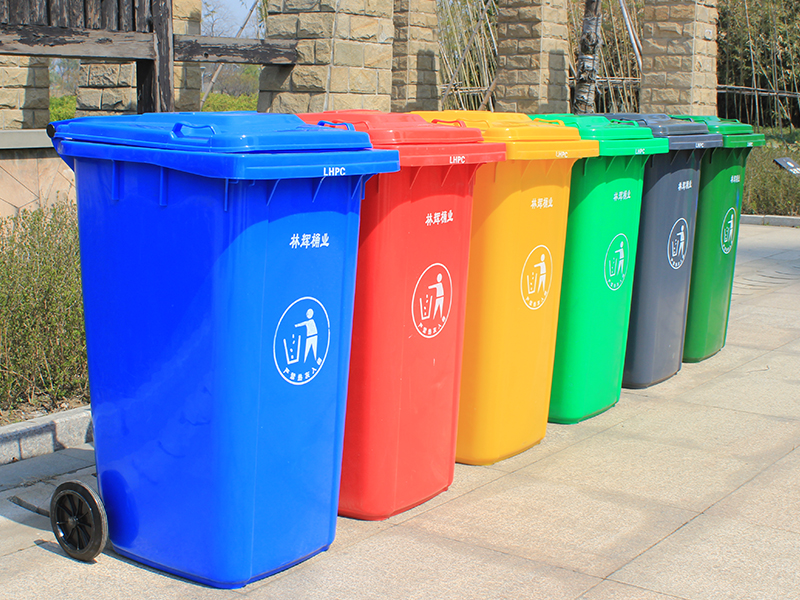
Recycling Bins: How to Build a Waste Sorting System That People Actually Use
Most recycling programmes are announced with good intentions and quietly fail within a year. The usual reason is not a lack of commitment — it is that recycling bins were bought before anyone defined the waste streams, the collection route or the behaviour the bins are supposed to support. A recycling bin is one component in a sorting system, and the system is what determines whether material actually gets separated. This guide walks through how facilities managers, procurement teams and distributors specify recycling bins and waste sorting setups that survive daily use: stream design first, then colour coding, container formats, outdoor points and the logistics of getting separated material off site.
Why Recycling Programmes Fail Before the Bins Arrive
The most common failure pattern looks like this: a sustainability target is set, a pallet of identical recycling bins is ordered, the bins arrive, and within weeks every one of them contains mixed waste. Nothing about the containers caused it. The waste streams were never mapped, so nobody could say which bin was meant for what, and the placement followed convenience rather than where waste is actually generated.
A second, quieter failure mode is contamination. When general waste ends up in a recycling stream, the whole batch can be rejected at collection. Facilities that track contamination rates often discover that a handful of badly placed bins produce most of the problem — typically the ones closest to food areas or the ones whose openings do not signal what belongs inside. Both failure modes are design problems, not compliance problems, and both are cheaper to fix on paper than after delivery.
Design the Streams First, Then Choose Recycling Bins
Before comparing containers, answer three questions for each point of generation on site: what waste is produced here, roughly how fast does it accumulate, and who empties it. A food court, a print room and an office desk area generate completely different streams, and a single recycling bin type cannot serve all three.
Most facilities settle on three or four streams: general waste, one or two dry recyclables relevant to their local collection service, and food waste where applicable. The decisive constraint is usually the collector, not the site — separated material has to leave in a format the hauler actually accepts, so the stream list should be agreed with the collection service before recycling bins are ordered, not after. Where the collector takes mixed dry recyclables in one stream, six-way separation indoors creates work with no benefit; where streams are collected separately, the bins have to match from the first day.
Colour Coding and Labelling Recycling Bins
Colour is the fastest signal a person gets when deciding where to throw something away. There is no single worldwide standard, but several conventions are widely recognised: green for general recycling or glass, blue for paper and cardboard, yellow for plastics and cans, red for general or hazardous waste depending on the country, and dark colours for non-recyclables. Facilities operating across regions should check local conventions rather than assume one scheme transfers.
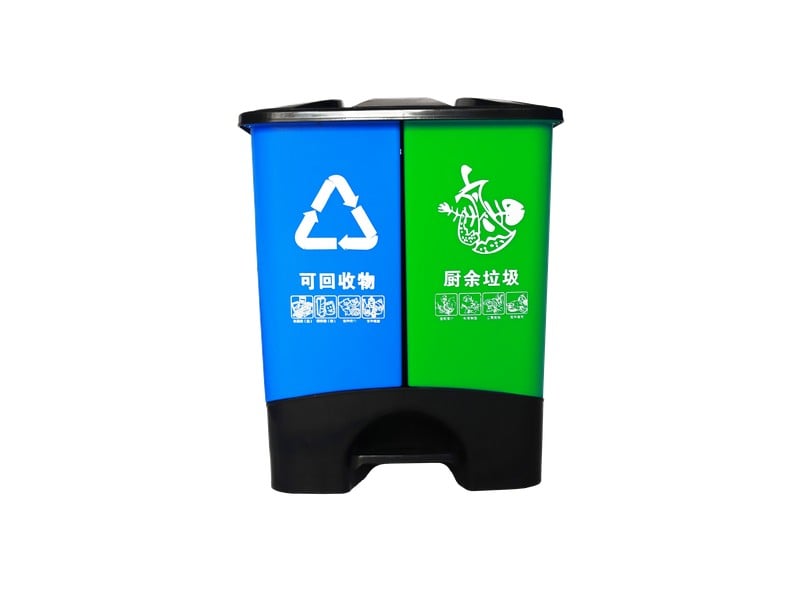
Colour alone is not enough, because conventions conflict between countries and between buildings. Labels carry the specific message: a photo or pictogram of what belongs in that stream, fixed at eye level on the lid or front face. The most effective label set is short and positive — it shows what goes in, not a long list of prohibitions. Where literacy varies or buildings serve international users, pictograms do the work that text cannot. Colour coding and labelling work together as one decision, and they should be settled before the bins are ordered so the right colours and graphics arrive with the containers.
Matching Container Types to Points of Generation
Different points of generation impose different requirements on a container, and this is where the container decision actually gets made.
Hygiene-Sensitive Points
Washrooms, clinics, food preparation areas and any space where hands are washed after bin contact suit pedal-operated bins. A foot pedal keeps hands off the lid, which supports hygiene protocols and reduces the transfer of contamination between users. A sealed lid also contains odour between emptying cycles — the reason pedal waste bins are the default specification in hospitality back-of-house and healthcare spaces.
Multi-Stream Points
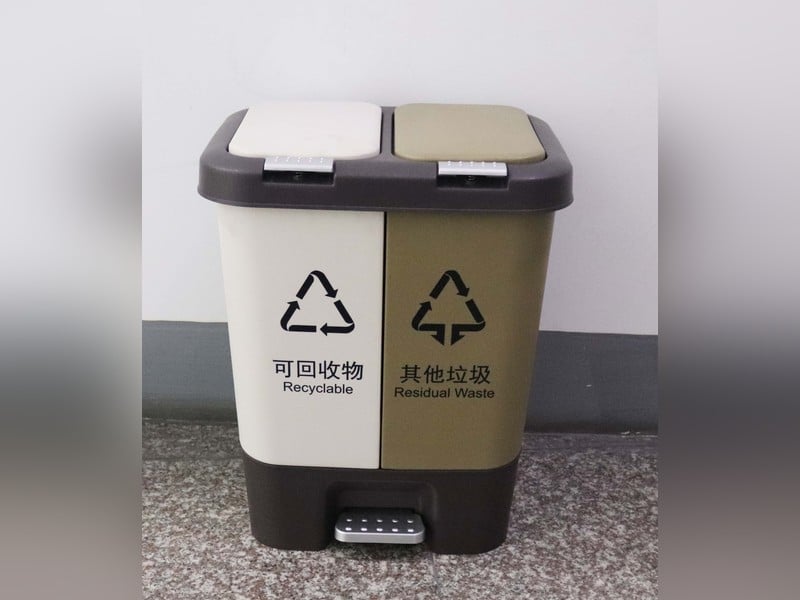
Where several streams are collected at one station, sorting bins with divided compartments keep streams physically separated in a single footprint. This is the format that works in staff kitchens, print rooms and shared office floors, because users make one decision at one station instead of walking between three containers. A compartment station also forces the colour and label decision to be consistent across the whole station, which is exactly what contamination control needs.
High-Volume and Back-of-House Points
Loading areas, workshops and large floors need volume and mobility rather than appearance. Open or wide-aperture containers handle high turnover of dry, bulky recyclables such as cardboard, and wheeled bins let staff move full containers to the collection point without manual lifting. The container for these points is chosen for handling, not for looks, and under-specifying here is what produces the overflow that undermines the whole programme.
Outdoor Recycling Points and Collection Logistics
Outdoors, the requirements change again. Containers stand in weather all year, so UV-stabilised bodies and weather-resistant fittings decide how the units age. Containers such as a circular garbage bin with a compact footprint work well where space is tight, provided the same weather and stability requirements are met. Lids need to keep rain out — a wet recycling stream is a rejected recycling stream in most collection systems — while staying operable with one hand when someone is holding items in the other. Where bins stand in public or semi-public space, weight and stability matter, because a container that moves in wind or gets knocked over becomes a litter source instead of a sorting point.
The logistics check comes last but matters most. Confirm with the collection service how separated material leaves the site: whether the hauler lifts wheeled bins mechanically, what aperture or lid type the lifting equipment works with, and how far staff have to move full containers. This is the single most common reason a newly delivered container set is rejected on site — the recycling bins fit the space but not the vehicle.
Sustainability Reporting Is Changing How Recycling Bins Are Bought
Procurement for waste containers used to be a facilities decision. It increasingly reports into sustainability targets. Corporate ESG reporting frameworks, tightening packaging regulations and customer expectations are pushing organisations to produce actual diversion data — how much waste was separated and recycled, not just collected. That changes what is required from the equipment: streams have to be measurable, which means separation has to be consistent, which means the containers and their labelling have to make the right action the easy action.
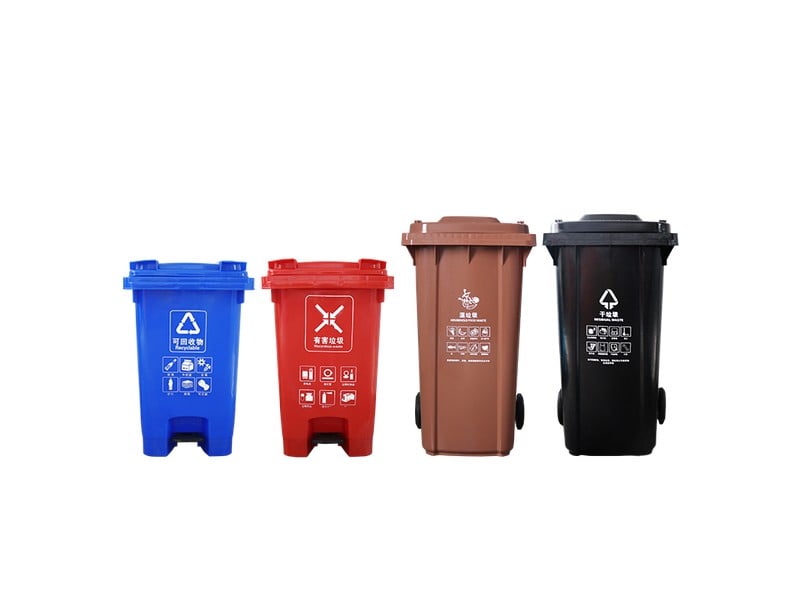
It also changes the buying pattern. Rather than one bulk order of identical containers, facilities are specifying per-zone sets — hygiene points, multi-stream stations, back-of-house volume — with consistent colour coding across the estate. Distributors serving this demand increasingly quote complete sorting systems rather than individual units, and buyers who arrive with a stream map and a placement plan get quotes that reflect their actual requirement instead of a guess.
Frequently Asked Questions
How many recycling bins does a facility need?
Work from points of generation, not headcount. Every place waste is created — desks, kitchens, print areas, washrooms, loading bays — needs a station, and each station needs one container per stream that is generated there. A small office with three generation points may need fewer recycling bins than a large one with twenty; the audit, not the floor area, drives the number.
What colours should recycling bins be?
Check the local convention first, because schemes differ by country and region. Whatever scheme applies, use it consistently across every site: consistency inside the building matters more to contamination rates than matching any particular external standard, because users learn one system and repeat it.
Where should recycling bins be placed?
Where waste is generated, not where there is a free corner. A recycling bin placed ten steps from the coffee machine will collect less than one placed beside it. Placement is the variable with the largest effect on separation behaviour and the lowest-cost one to get right.
Can recycling bins be used outdoors?
Yes, with the right specification: UV-stabilised material, weather-resistant lids, and enough weight or fixing to stay put in wind. Outdoor containers also need to match whatever the collection vehicle lifts or empties, which should be confirmed with the hauler before ordering.
How do we stop contamination between streams?
Three measures do most of the work: clear colour coding with pictogram labels, apertures shaped to the stream where practical, and stations that put all streams for a given point of generation in one place so users make one decision. Track contamination for the first few weeks after rollout and adjust placement before blaming users.
What should buyers confirm before ordering recycling bins in bulk?
The waste stream list agreed with the collector, the number of stations and streams per station, indoor versus outdoor specification, colours and labelling, and the handling interface with the collection vehicle. Suppliers who receive this specification can quote accurately; without it, quotes default to standard models that may not fit the system.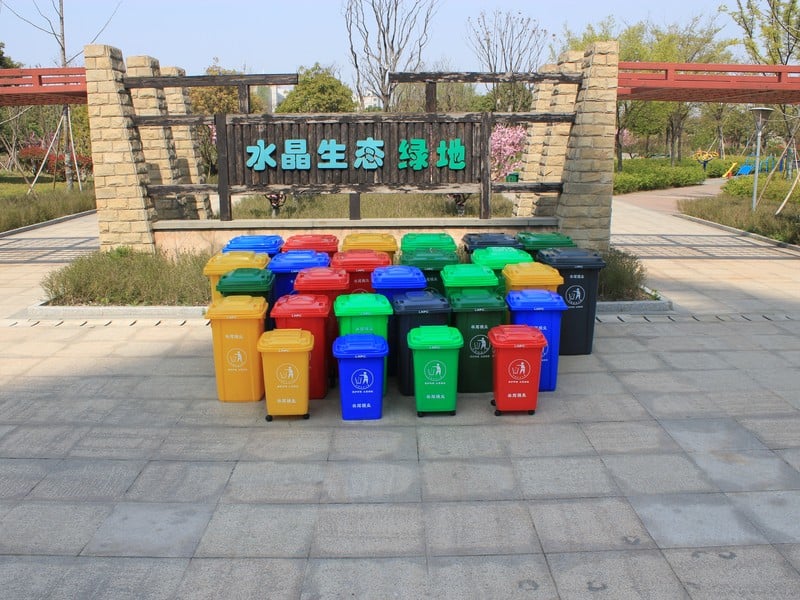 Key Takeaways
- Define the waste streams with the collection service first; recycling bins are the last decision, not the first.
- Match container formats to points of generation: pedal bins for hygiene points, compartment stations for multi-stream areas, wheeled volume for back-of-house.
- Colour coding and pictogram labels are one decision — settle them before ordering and apply them consistently across every site.
- Confirm the collection interface — lifting equipment, apertures, movement distances — before delivery, not after.
- Sustainability reporting is turning waste containers into procurement items with data requirements, which rewards buyers who arrive with a stream map and a placement plan.
Need a waste sorting system specified for your facility? Send us your points of generation, streams and site conditions — we will propose container formats and colours to match, with bulk order support for distributors and facilities groups.
Contact Us
Email: [email protected]
Mobile: +86 13915871341
Website: https://www.linhuiplastics.com/
Table of Contents
- Why Recycling Programmes Fail Before the Bins Arrive
- Design the Streams First, Then Choose Recycling Bins
- Colour Coding and Labelling Recycling Bins
- Matching Container Types to Points of Generation
- Outdoor Recycling Points and Collection Logistics
- Sustainability Reporting Is Changing How Recycling Bins Are Bought
- Frequently Asked Questions
- Contact Us